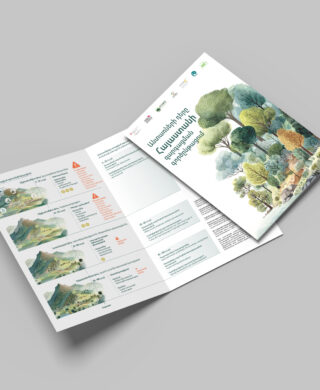
Zoï Books are produced for the United Nations, the European Union, regions and countries and a growing community of readers world-wide. We closely cooperate with GRID-Arendal in providing environmental information for decision-making.


Geo-cities manual - integrated environmental assessment of urban areas guideline
Geo Cities Manual - Guidelines for Integrated Environmental Assessment of Urban Areas, 2012

The fundamental objective of the GEO Cities project is to promote a better understanding of the interaction between urban development and the environment, providing the region’s local governments, scientists, policy-makers and the public with reliable and up-to-date information to help them improve urban environmental planning and management. The GEO Cities assessments provide information on the state of the environment, the main factors for change, and the policies affecting the environment and emerging themes.

vital graphics, Caspian sea
Vital Caspian Graphics 2 - Opportunities, Aspirations and Challenges, 2012

More than five years ago we published the first edition of Vital Caspian Graphics. This new edition illustrates the rapidly changing environment in the geopolitically sensitive area around the Caspian Sea. These Vital Caspian Graphics 2 present lesser-known aspects of the region while covering the broader picture in an attractive format to reach out to communities beyond environmental professionals. One of the highlights are the photographic essays by Rena Effendi and Mila Teshaieva.

Biodiversity in Central Asia
Biodiversity in Central Asia, 2011

Overall, there is much to look forward to when it comes to preserving biodiversity both globally and in Central Asia. As the 2011-2020 UN Decade on Biodiversity unfolds, this volume will undoubtedly make a key contribution to those efforts.

Climate change in South Caucasus
Draft - Climate Change in the South Caucasus, 2011

With this publication, Zoï Environment Network aims to communicate the known facts of climate change in a well illustrated, easily understandable manner, accessible to everyone. For this we could rely on the rich Caucasian tradition of geographic analysis, map making and visual arts. Unfortunately, the format did not allow the use of other Caucasian specialities, such as music, film, cuisine or toasts, it will be up to the reader to accompany his or her lecture with some of this. We do however want to make the point that also in the Caucasus, climate change is no more myth.

Green Economy
Working towards a Balanced and Inclusive Green Economy. A United Nations System-wide Perspective, 2011

In September 2009 the United Nations Environment Management Group agreed to establish an Issue Management Group on Green Economy. This group was tasked to prepare a report to assess how the United Nations system could coherently support countries in transitioning to a green economy. The report is expected to facilitate a common understanding of the green economy approach and the measures required for the transition. The report is also envisioned to contribute to the preparatory process for the 2012 United Nations Conference on Sustainable Development (UNCSD or Rio+20) where “the green economy in the context of sustainable development and poverty eradication” is one of the two themes; the other is “the institutional framework for sustainable development”.

e-book

CALCIM, land degradation, desertification in Central Asia
Technical paper: Land Degradation and Desertification in Central Asia, 2012

The purpose of this assessment is to provide information and recommendations for the Swiss Federal Office for the Environment and other members of the GEF Constituency group for consideration in the second phase of the CACILM (Central Asian Countries Initiative for Land Management) partnership. The overall objective is to assess the extent to which the first phase of the partnership has contributed to reduction of combating land degradation and improving rural livelihoods and to identify the emerging trends and opportunities for CACILM promotion as an example of the regional GEF multi-purpose dynamic partnership.

Central Asia - From Rio 1992 to 2012 and beyond: Sustainable Mountain Development, 2011

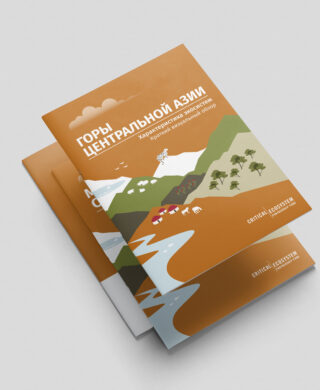
The present report aims to provide an easily understandable illustrated overview of trends and challenges in the sustainable mountain development of Central Asia since 1992, highlight selected achievements and lessons learned by various stakeholders and identify opportunities. It builds on information from the original experience and interviews with key actors, official and scientific sources and numerous news.

drylands
Global Drylands: a UN system-wide response, 2011

More than two billion people depend on the world’s arid and semi-arid lands. Preventing land degradation and supporting sustainable development in drylands has major implications for food security, climate change and human settlement. This report, issued at the beginning of the United Nations Decade for Deserts and the Fight against Desertification, sets out a shared strategy by UN agencies to rise to the challenge of addressing the special needs of these vital zones. This report illustrates the many ways in which the UN system is identifying opportunities to mainstream the drylands agenda into the policy-making process.

e-book

Amu Darya River, ENVSEC
Environment and Security in the Amu Darya River Basin, 2011

The prime aim of this report is to identify the environmental stress points in the Amu Darya basin which have, or may have, security repercussions for the states and population.The report then suggests solutions to the challenges identified during the assessment. All in all, the field missions covered more than 3 000 km. Participants included experts from the region and from international organizations. Almost 100 experts were directly involved or consulted during the process.

UNEP press release

Second Assessment of Transboundary Rivers, Lakes and Groundwaters
Second Assessment of Transboundary Rivers, Lakes and Groundwaters in the UNECE region, 2011

The Second Assessment of Transboundary Rivers, Lakes and Groundwaters is the most comprehensive, up-to-date overview of the status of transboundary waters in the European and Asian parts of the UNECE region. It covers more than 140 transboundary rivers, 25 transboundary lakes and about 200 transboundary groundwaters. It has been prepared upon request by the Sixth “Environment for Europe” Ministerial Conference as an input for the Seventh Ministerial Conference in Astana in September 2011.

Russian

Climate Change in Eastern Europe (Russian), 2011

The publication prepared by Zoi in cooperation with GRID-Arendal and the Environment and Security initiative explores the impacts of climate change on Belarus, Moldova and Ukraine. The three countries of Eastern Europe will not be affected as strongly as many other parts of Eurasia, yet they will see more of severe floods and forest fires, decreasing water reserves in the south, and gradual changes in biodiversity, agriculture and food security. The countries have only started to address these challenges: national policies remain week and the general public is hardly aware of the problem. Meanwhile the industrialized Eastern Europe contributes to the global emissions of greenhouse gases, thus affecting more vulnerable parts of the world. The report was launched at the 7th Ministerial conference "Environment for Europe" in Astana in September 2011.

e-book in Russian

Europe's Environment - AoA
Europe's Environment: An Assessment of Assessments, 2011

In support of the 2011 Ministerial Conference, the European Environment Agency, supported by UNECE, has prepared a Europe's environment — An Assessment of Assessments (EE-AoA). This assessment of assessments focuses on the two themes of the Astana conference: water and related ecosystems, and green economy. What progress is being made? Is the right information available to be able to tell? Are the correct approaches to assess what is known being used to support the policy process? Given the volume of environmental reports, indicators and data available a huge amount seems to be known about these issues. But is all this informing the policy process effectively, and is the best being done with the resources available for assessment? The aim of this AoA is to investigate these issues by assessing the assessments: cataloguing what exists, reviewing what is in them and analysing how they are put together. The overall objective is to improve the way in which the state of Europe's environment is kept under on-going review.

Press-tour on Dniester River
Press-Tour on the Dniester River, 2011

Collection of articles and photographs from the Press-tour on Dniester River. The training was organised by Zoï, in July 2011, under the Environment and Security initiative (ENVSEC).

Newspaper article in Wochenzeitung (German) - Russian - English
Alex Kirby's broadcast on BBC Radio 4, 27th October 2011
Audio mp3 file
Broadcast transcription
Photos collection
Video
IHPA- POPs Newsletter

Dniester III floods climate
Technical paper: Reducing vulnerability to extreme floods and climate change in the Dniester River basin, 2011

ENVSEC Project “Reducing vulnerability to extreme floods and climate change in the Dniester river basin” (Dniester - III floods & climate).
Summary of the baseline studies for Ukraine and the Republic of Moldova, February 2011.

GIS - Central Asia

Maps of Central Asia: Aral Sea basin, Kazakhstan (south part), Kyrgyzstan, Tajikistan, Turkmenistan, Uzbekistan

Coalland, Donetsk, 2011

This report was produced within the framework of Assessment and Capacity-Building for Managing Environment and Security Risks in Donbas and Salihorsk regions, a UNEP-led ENVSEC project implemented in Ukraine and Belarus to address environmental risk from hazardous activities, and improve environmental management and awareness. Project activities included technical assessments, training and analysis of mining sites, but also workshops and training sessions for journalists to build up their communication skills on environmental topics relevant to their region. This publication presents the findings and results of both parts of the project.

desrtification, land degradation, drought, UNCCD
Desertification, 2011

This book is intended as a basic information kit that tells "the story" of desertification, land degradation and drought at the global scale, together with a comprehensive set of graphics. The book indicates trends as they have taken place over the last decades, combining and connecting issues, and present priorities. It also provides information on the United Nations Convention to Combat Desertification (UNCCD) and how it works to forge a global partnership to reverse and prevent desertification/land degradation and to mitigate the effects of drought in affected areas in order to support poverty reduction and environmental sustainability.

Jordan Environment and Security, 2011

Jordan is an ideal case study to highlight the tension between available resources and rising demand in the Middle East, but also globally. Jordan is an extreme case in that it lacks all three key necessities for human civilization: food, water and energy. This report explains that in order to provide long-term answers securing the well-being of future generations there are no short-term answers, nor yet within the boundaries of the nation-state. Regional cooperation is needed to maximize shared benefits.

Mercury global trade map
Mercury trade in the world - Zoïmap, 2011

A solid appreciation of commercial mercury trade is a vital foundation upon which governments can build effective strategies and promote specific measures to address national and global mercury challenges.

Technical paper: European neighborhood policy instrument,shared environmental information systems, Armenia country, 2011

This assessment report describes the existing institutional cooperation in Armenia in the field of water resources, atmospheric air, soil and biodiversity protection and waste management, assesses current environmental inter-institutional cooperation in these priority fields and identifies the country's capacity for taking SEIS implementation forward.

Mercury Khaidarkan Poster
Khaidarkan Mercury - Poster, 2011

There is now only one known mercury mine in the world which continues to sell its output abroad: Khaidarkan, in the remote mountains of southern Kyrgyzstan.


Chlor-alkali partnership area - UNEP Global Mercury
UNEP Global Mercury, Chlor-alkali partnership area - Poster, 2011

Design, maps, graphics and layout by Zoï Environment Network.

Poster presented at the "International Conference on mercury as a global polluant", July 2001.

Dniester III floods climate
Technical paper: Transboundary monitoring of the Dniester River - Assessment and evaluation, 2010

Action Programme to Improve Transboundary Cooperation and Sustainable Management of the Dniester River Basin (Dniester - III)

Russian

e-book Russian               e-book English


SOER 2010 Russian
State of the Environment - Report No 1, 2010

Zoï has provided the Russian translation of the report for the European Environment Agency.


Advancing the Biodiversity Agenda, 2010

The loss of land, freshwater and marine biodiversity is part of a wider wave of environmental change driven by ever expanding human activities, touching on virtually every component of our biosphere and the global climate system. This report by the Environment Management Group presents why biodiversity matters to sectors, and how the different policy sectors can help maintain biodiversity and ecosystem services.

Dniester basin GIS
GIS - Dniester Basin

Dniester Basin GIS (Geographic Information System)

Russian - English

The European Environment: Global Megatrends, 2010

Europe contributes to global environmental pressures and accelerating feedbacks through its dependence on fossil fuels, mining products and other imports. Conversely, changes elsewhere increasingly affect Europe. This assessment of global megatrends focuses on the impact of global pressures on Europe. A global-to-European perspective is relevant for European environmental policy making because Europe’s environmental challenges and management options are being reshaped by global drivers such as demographics, technologies, trade patterns and consumption.

Pripyat river, Styr-Prostyr basin maps
Maps of flood risks in the Styr-Prostyr river basin, 2010

The maps are JPG images in Russian ( large files):

topography of the basin
areas affected by floods with probability 0.5% - 1% - 10% - 25%

infrastructure in the basin
infrastructure at risk from floods with probability 0.5% - 1% - 10% - 25%

The land of our concern, Donetsk Oblast, state of the environment
The Land of our Concern - based on material from the Reports on the State of the Natural Environment in Donetsk Oblast, 2010

State of the Environment in Donetsk region, Ukraine, Reports: 2007-2008 Russian  2006 Russian


Water management on the upper Pripyat river
Water management on the upper Pripyat river, 2010

Monograph on water management on the upper Pripyat river between Belarus and Ukraine, prepared by the project team to present project results to the professional audience (Russian).

Mapping flood risks in the Styr-Prostyr basin part of the upper Pripyat basin

Moldova children health
Children health and environment in the Republic of Moldova, 2010

This report reflects the current situation on public health in the country, including children’s health, and the impact of environmental factors on their health, as well as an overview of national priorities, policies and activities that were conducted to improve the existing situation.

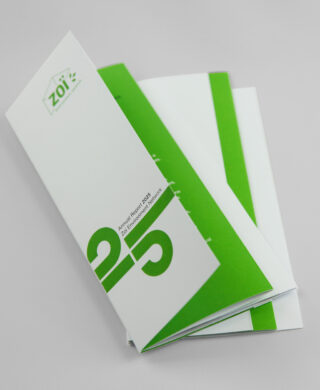
zoi annual report 2010
Zoi Annual Report, 2010

We are still working with our friends and former colleagues, and with a growing number of other people as well as our portfolio grows. Zoï receives no public funding at all which gives us a degree of flexibility that allows us to work with our clients much faster and more responsively than used to be possible. We sometimes think, in our more headlong moments, that the world really does need more Zoïs.

Press-Tour and Master-Class in Environmental Journalism, in Belarus Polesie
Press-Tour and Master-Class in Environmental Journalism, in Belarus Polesie, 2010

Collection of articles from the Press-Tour and Master-Class in Belarus Polesie. The training was organised by Zoï, in July 2010, under the Environment and Security initiative (ENVSEC).

Mining and Environment in the Western Balkans, 2010

Over the last few years UNEP and its ENVSEC partners have been working to identify and reduce transboundary environmental risks from hazardous mining operations in South Eastern Europe, with the focus on Albania, Bosnia and Herzegovina, the Former Yugoslav Republic of Macedonia, Kosovo, Montenegro and Serbia. This document seeks to provide an overview of the results and experience created over this period to facilitate related work in the future and ensure broad dissemination of the lessons learned to guarantee that the efforts made so far can be sustained.

Interactive map

Taking Land, Crimea 2010
Taking Land - Crimea, 2010

The photographs in this book form part of a project commissioned by the Environment and Security Initiative (ENSEC) published in association with Zoi Environment Network. Alban Kakulya is a writter and photographer based in Switzerland.

Kick the Habit – a UN guide to Climate Neutrality, 2009

This guide shows how various levels of society can work towards climate neutrality. Written and reviewed by experts from many disciplines and various countries, the book is aimed at individuals, small and large businesses, NGOs, international organizations, cities and countries.

Zoï Annual Report, 2009

Zoï environment network was founded in Geneva in December 2008 with the mission “to reveal, explain and communicate connections between the environment and society”. This is Zoï's first annual report presenting our achievements and products created in 2009 and introducing the contributors behind the scene.

e.book

Vital Ozone Graphics 2 - The Climate link, 2009

A Resource Kit for journalists, which provides the essential visuals, facts, links and contacts to develop ozone story ideas. This publication is intended to serve as an interesting reference for those who wish to learn more about the Montreal Protocol and ozone layer depletion.

Zoïtopia, 2009

This publication integrates two streams: the arguments of leading researchers for a more fundamental response to the multiple threats to our single planetary environment with the artistic vision of a world in which everything has been redistributed to achieve radical equity. Both argue for a new way of managing the earth and its resources - a way that provides for everyone’s basic needs. The alternative? Science, they say, offers the probable answer: a return to the dark ages.

Khaidarkan Mercury - Addressing primary mercury mining in Kyrgyzstan, 2009

This book depicts the world’s last known exporting mercury mine – at Khaidarkan in southern Kyrgyzstan. For two years, Zoï assisted the Government of Kyrgyzstan and national and local stakeholders to consider options regarding the future of the mine.

Climate Change in Central Asia, 2009

This booklet provides a synthesis of what climate change may mean for Central Asia. It builds upon the latest series of the official national communications on climate change by the Central Asian states under the UN Framework Convention on Climate Change. This highly visual format seeks to communicate to decision makers and to serve education purposes alike.

Moving Towards A Climate Neutral UN
Moving Towards A Climate Neutral UN, 2009

The UN system's footprint and efforts to reduce it.


Environment and Security Issues in the Mediterranean, 2009

This synthesis report makes these complex issues better understandable to decision-makers and a more general public. The concise analysis produced integrates the regional environmental and security, political and economical discourse.

Greening the dumps
Technical paper: Greening the waste heaps - Best practice in mining site rehabilitation, 2008

Introduction of Best Practice in mining site rehabilitation based on case studies and policy examples from around the world. 'Greening the dumps best practices' is in Russian and was presented at the conference ‘Rehabilitation of industrial land’, on 10 October, 2008 in Donetsk, Ukraine.

Pripyat, Beloozerskaya
Technical paper: Upper Pripyat field study, 2008

A team of Belarus, Ukrainian and international experts visited the area around the Vyzhevsky water gate of the Beloozerskaya water-feed system, on 30 June - 4 July 2008. The report is in Russian.

Summary in English

Environment and Security in the Eastern Caspian Region, 2008

This report considers the role and impact of environmental factors in securing human safety and sustainable development of the eastern Caspian Sea region, including the parts of Kazakhstan and Turkmenistan opening onto the Caspian Sea.

OSCE,Nagorno-Karabakh,fire
Environmental assessment mission to fire-affected territories in and around Nagorno-Karabakh region, 2007

The mandate of the mission led by OSCE was to assess the short-term and long-term impact of the fires of summer 2006 on the environment in the fire-affected territories and to make recommendations on how to counteract any detrimental impact of the fires and on an environmental operation.

ENVSEC priority areas in Eastern Europe
ENVSEC priority areas in Eastern Europe - Poster, 2007

Environment and Security, Priority areas in Eastern Europe, Belarus, Moldova, Ukraine.

Russian

Climate in Peril – A popular report to the latest IPCC findings, 2007

This publication presents the substance of the Climate Change 2007 Synthesis Report of the intergovernmental Panel on Climate Change in simplified language and structure.

Eastern Europe, environment and security, ENVSEC
Environment and Security - Transforming risks into cooperation - The case of Eastern Europe, 2007

This publication highlights the importance of recognising the region’s geopolitical positioning between the EU and the Russian Federation, improving energy security without jeopardising the environment, addressing the Transnistrian conflict in Moldova and strengthening cooperation over shared rivers and ecosystems.

Balkan, Balkans, environment and security
Vital Balkan Graphics, 2007

Environmental protection is one of the areas where the Balkan countries still face a big challenge to catch up with their western neighbours. After the 1990s conflicts and the breakup of Yugoslavia, six new Balkan states emerged. Apart from integrating environmental concerns into the new policies, a major challenge is environmental management across new borders.

vital graphics, Caspian sea
Vital Caspian Graphics, 2007

In recent years the Caspian Sea has been the focus of increased global attention. The world-wide decline in oil and gas reserves and have heightened interest in an area where there is still growth potential in oil and gas exploration.

Policies, practises and guidelines for sustainable mining and closure of mines
Mining for Closure: Policies, practises and guidelines for sustainable mining and closure of mines, 2005

This publication of the Environment and Security Initiative (ENVSEC) aims to present a basis for action within South Eastern Europe and within the Tisza River Basin towards the development of corporate practice, regulatory frameworks, governance guidelines and/or financial and insurance markets suitable for the support of a modern mining industry.

Ferghana Valley,Kyrgzystan,Tajikistan, Uzbekistan,ENVSEC,
Environment and Security - Transforming risks into cooperation - The case of Central Asia, 2005

The assesssment has been produced upon request of the countries of the Ferghana Valley - Kyrgzystan, Tajikistan and Uzbekistan - and has widely benefited from their inputs. it shows how the Environment and Security initiative has helped identify both environmental threats to regional security and opportunities for cross-border dialogue.

Russian

ENVSEC Caucasus
Environment and security priority areas in the Southern Caucasus Russian - Poster, 2004

The text on this poster is in Russian.


ENVSEC Caucasus
Environment and Security - Transforming risks into cooperation - The Case of the Southern Caucasus, 2004

The report briefly presents a preliminary assessment of environment and security linkages in the Southern Caucasus, carried out at the request of the host governments and in consultation with national experts. Its purpose is to establish the parameters for follow-up action by national authorities and international partners.

Russian

Environment and Security: Transforming risks into cooperation - The case of Central Asia and South-Eastern Europe, 2003

This report focuses on the environmental stress affecting security in two case regions, Central Asia and South Eastern Europe. It provides maps with an overview on major environmental risks to human development and security. The maps are derived from information gathered at consultation workshops in Belgrade and Ashgabat, which were attended by local experts, government and non-government representatives.

Russian